
Households are likely to remain the primary net lenders to the economy in the coming decades.

The rupee has depreciated by 0.6 per cent so far in the current financial year.

The Reserve Bank of India (RBI) has recognised the Fintech Association for Consumer Empowerment (FACE) as a self-regulatory organisation (SRO) in the fintech sector, the central bank announced on Wednesday. The banking regulator received three applications for fintech SRO. Of the remaining two applications, one has been returned by the RBI with a provision for resubmission after meeting specific requirements, while the third application is still under examination, said Governor Shaktikanta Das at the Global Fintech Fest in Mumbai.
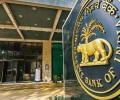
The Reserve Bank of India (RBI) will launch the Unified Lending Interface (ULI) nationwide in due course, aiming to transform India's lending sector, similar to how the Unified Payments Interface (UPI) revolutionised the payments ecosystem, Governor Shaktikanta Das said on Monday.

Overseas Indians deposited around $4 billion in non-resident Indian (NRI) deposit schemes in April - June FY25, up 79 per cent over the amount deposited in these schemes in the same period last year, data released by the Reserve Bank of India (RBI) on Monday showed. In April - June FY25, inflows into the NRI schemes stood at $3.95 billion, compared to $2.21 billion during the same period a year ago. With this, the total outstanding NRI deposits as of June stood at $155.71 billion.

Private banks' net profit grew 26.3 per cent year-on-year (Y-o-Y) to Rs 48,982 crore in the first quarter ended June 2024 (Q1FY25) owing to healthy growth in credit and other income. The gross non-performing assets (GNPAs) increased with the end of dispensation granted during the pandemic, according to the data compiled by BS Research Bureau for listed 18 private banks.

The Reserve Bank of India (RBI) on Wednesday issued a draft framework for alternative authentication mechanism for digital payments, wherein it has mandated that all digital payment transactions would have to be authenticated with an additional factor of authentication (AFA), except small value contactless card payments for up to Rs 5,000 at point of sale terminals, e-mandates for recurring transactions, and small value digital payments through offline mode, among others. Additionally, it has said that all digital payment transactions, other than card present transactions, have to ensure that one of the factors of authentication is dynamically created, i.e., the factor is generated after initiation of payment; is specific to the transaction; and cannot be reused.

The average cost of data breaches in India reached $2.18 million in 2023, marking a 28 per cent increase since 2020, according to the Reserve Bank of India's (RBI) Currency and Finance report for 2023-24. The report said that India's average data breach cost was still below the global average. The most common attacks in India are phishing which was at 22 per cent and stolen or compromised credentials was 16 per cent. The automotive industry is highly vulnerable to cyber attacks, whereas the banking and financial services sector, benefiting from stringent regulations, enjoys comparatively stronger protection.

The introduction of tax deducted at source (TDS) on income from central government securities and state bonds may not lead to a significant effect on retail participation, according to market participants. The Union Budget proposed that starting October 1, 2024, investors may face a 10 per cent TDS on investments in central government securities and state development loans (SDLs). "Last Budget, TDS on interest on securities was reintroduced.

Overseas fundraising by Indian firms is experiencing a robust revival in 2024, following a lacklustre 2023. This resurgence is primarily driven by strong demand for high-yield bonds from international investors amid improving liquidity conditions and reduced hedging costs. Indian companies raised ~32,619 crore through overseas bonds in the first half of 2024, surpassing the total amount raised via such instruments in the entire 2023, which stood at ~31,218 crore, according to PRIME Database. In comparison, ~45,237 crore was raised in 2022 and ~1.05 trillion was secured in 2021.

The share of equity and investment funds in the total financial wealth of households increased by more than 50% between 2011-2012 and 2022-2023.

Public-sector banks, including Canara Bank and Bank of India, are tapping the infrastructure bond market. Canara Bank on Tuesday raised Rs 10,000 crore at a coupon rate of 7.40 per cent through 10-year infrastructure bonds. This comes after SBI on July 10 raised Rs 10,000 crore also through infrastructure bonds with a 15-year tenor at a coupon rate of 7.36 per cent.

Major credit issuers, including the largest - HDFC Bank - have integrated their systems with the Bharat Bill Payment Systems (BBPS) for receiving credit card repayments via third-party applications.
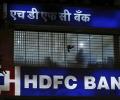
As many as 140 million customers of HDFC Bank and Axis Bank are expected to face interruption in banking services in the weekend due to the former's system upgrade and the transition of Citi India business to the latter. Both the banks have notified their customers about the interruption in services. HDFC Bank - the country's largest private sector lender with 93.2 million customers - had announced that it will undertake a system upgrade on July 13, wherein it will migrate its core banking system (CBS) to a new engineered platform to enhance customer experience.

Despite steady loan growth, the banking sector is expected to report subdued margins in the quarter ending June 2024 (Q1FY25), driven by high demand for deposits amidst tight liquidity conditions. However, according to Bloomberg analysts, listed banks are forecasted to see a 14.5 per cent year-on-year (Y-o-Y) increase in net profit. Estimates showed that banks' net interest income (NII), and revenues from interest minus interest expenses might grow 11.9 per cent Y-o-Y.

The expectations of a borrowing cut by the government faded among bond-market participants after the general election results because they feel the compulsions of running a coalition may put pressure on the exchequer, according to dealers. The recent trend of moderate depreciation in the rupee's nominal effective exchange rate (NEER) might not persist if there are significant changes to the structural reform agenda.

The Reserve Bank of India's (RBI's) record surplus transfer to the government has raised hopes among bond traders that the government might reduce its gross borrowing for the current financial year (2024-25/FY25) by up to Rs 1 trillion. The RBI approved a dividend of Rs 2.11 trillion for the central government for 2023-24, marking an increase of roughly 141 per cent from 2022-23 (FY23). In addition, the contingency risk buffer has been raised to 6.5 per cent from the previous 6 per cent.

Debt mutual fund (MF) schemes, which witnessed relatively muted inflows in the past three years, saw a surge in investor interest in April amid election-induced volatility in the equity markets. Active debt funds garnered nearly Rs 66,000 crore net inflows in April, most at least since December 2020.

The Reserve Bank of India (RBI) abstained from selling any US dollars throughout February, for the first time in nine months. The decision comes amid increasing pressure on the rupee, as expectations of rate cuts by the US Federal Reserve keep pushing back. The last time the RBI did not sell dollar over a month was in May 2023.
Banks are preferring instruments with higher premium over government securities for their held-till-maturity (HTM) portfolio, following the new investment norms, which came into effect from April 1. They are stocking up on corporate bonds and state government securities to boost yield on their portfolio, according to market participants. "Definitely, if there is a good spread available and without lower credit risk, those instruments will be favoured to boost the yield on the portfolio.
 © 2026 Rediff.com - Advertise with us - Disclaimer - Privacy Policy - Sitemap - Feedback - About us - Terms of use - Grievances